
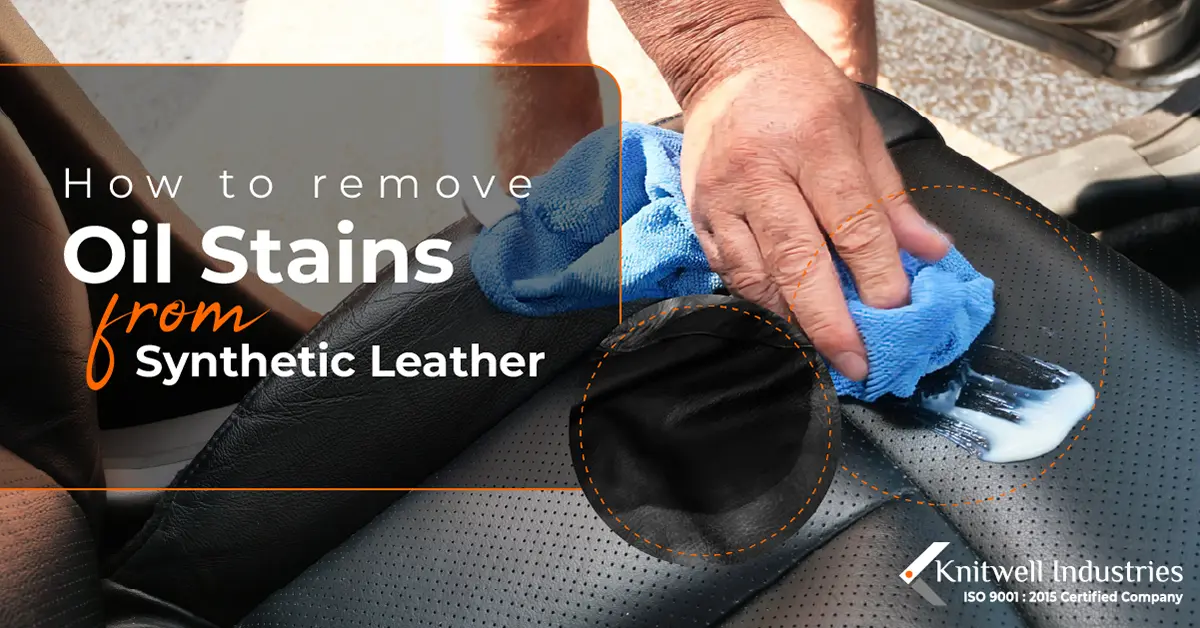
You sit down with a plate of food, and a little cooking oil drops onto your sofa. You wipe it with a tissue, but a dark mark remains. The same thing can happen to car seats, handbags, jackets, and shoes made from synthetic leather.
Oil stains can be annoying because they don't always disappear with a quick wipe. Some sit on the surface, while others collect around stitching or inside small cracks. Using the wrong cleaner can make things worse.
If you've noticed an oily patch, don't reach for bleach or a strong detergent. Start with a soft cloth and a little patience. You can remove many fresh stains with supplies you already have at home.
How to Remove Oil Stains from Synthetic Leather Using Simple Home Cleaning Methods
First, check what material you're cleaning. Synthetic leather is typically a fabric base covered with a coating of PU or PVC. This coating gives it a smooth appearance, but it can react adversely to strong cleaning chemicals.
PU leather often appears on handbags, jackets, furniture, and shoes. PVC-coated materials are also common in car interiors, footwear, and upholstery.
Look for a care label before you begin. If the manufacturer recommends a particular cleaning product, follow those instructions. Otherwise, test a mild soap solution on a hidden section.
You should also check whether the leather has cracks or peeling areas. Water and soap can enter damaged sections and affect the material underneath.
Things You'll Need to Clean an Oil Stain
You won't need a complicated cleaning kit. Keep these items ready:
- A clean microfiber cloth
- Mild dishwashing liquid
- Lukewarm water
- A soft cotton towel
- A small bowl
- A second cloth for wiping away soap
Choose a dishwashing liquid without strong degreasers or added bleach. Use only a few drops because too much soap can leave a sticky film.
Step-by-Step Guide to Cleaning Oil Stains from Faux Leather
1. Blot the Oil Before It Spreads
If you've just spilled oil, take a dry microfiber cloth and press it gently against the affected area.
Lift the cloth and keep going until it stops soaking up grease. Avoid rubbing because this can spread the oil over a larger section.
Pay attention to stitching and seams. Oil can settle in these areas, making it harder to clean later.
2. Mix a Little Dish Soap with Water
Fill a small bowl with lukewarm water and add two or three drops of mild dishwashing liquid.
Dip your cloth into the mixture, then squeeze it properly. You want a damp cloth, not one dripping with water.
Never pour the soap mixture directly onto synthetic leather. Excess water can reach the backing through seams or damaged sections.
3. Wipe the Stain with Gentle Movements
Start cleaning around the edge of the oily mark and slowly move towards its centre.
Use light pressure. Scrubbing harder won't necessarily remove the grease faster.
When cleaning embossed and printed leather, take special care around raised designs. These finishes may have decorative coatings that can wear away with repeated rubbing.
Stop after a few gentle passes and check whether the stain has faded.
4. Remove the Leftover Soap
Take another clean cloth, dampen it with plain water, and wipe away any soap residue.
Don't leave detergent sitting on the material. It may dry into a visible mark or affect certain surface finishes.
5. Let the Leather Dry on Its Own
Pat the area with a soft towel and leave it somewhere with good airflow.
Do not place the item in direct sunlight or near a heater or hairdryer. High temperatures can damage the coating, particularly on older synthetic leather.
What If the Oil Stain Has Been There for Days?
Old grease marks can be more difficult to remove. You may notice a darker patch even after cleaning away the surface oil.
Try the mild soap method once more, but don't keep scrubbing if nothing changes.
For stubborn marks, choose a cleaner that specifically mentions compatibility with PU or PVC leather. Read its instructions before applying it.
Sometimes, an old stain has already affected the coating. In that case, cleaning may improve its appearance without removing it completely.
Does the Cleaning Method Change for Different Products?
Not every synthetic leather item has the same finish or construction.
- Automotive Industry: Car seats often collect body oils, food grease, and lotion marks. Clean the affected area without soaking the seat seams.
- Footwear Industry: Shoes can develop grease marks near the toe or sides. Use a small damp cloth, particularly around glued edges.
- Furnishing Industry: Sofas, chairs, and cushions need careful cleaning because oil can collect in textured surfaces and stitching.
- Leather Goods & Garments: Handbags and jackets may have coloured prints or decorative finishes. Avoid strong cleaners that could affect their appearance.
Manufacturers also introduce new products and textures with different surface treatments. Always check the care instructions rather than using one cleaning method on everything.
Mistakes to Avoid When Cleaning Synthetic Leather
Many people damage artificial leather while trying to remove a small stain.
Avoid using nail polish remover, bleach, hard brushes, or rough cleaning pads. Don't use alcohol unless the manufacturer approves it.
Also, avoid ordinary leather oils and conditioners. Products made for genuine leather may not suit PU or PVC surfaces.
A Few Words About Knitwell Industries
Knitwell Industries supplies synthetic leather materials for footwear, furnishings, automotive applications, and leather goods. Its product range includes different colours, patterns, and
textured finishes. Before cleaning any finished product, check its care instructions and the type of coating used.
Frequently Asked Questions
1. Can I clean an oil stain with dish soap?
Yes. Mix a few drops of mild dish soap with water and use a damp cloth. Always test a hidden area first.
2. Is rubbing alcohol safe for synthetic leather?
Not always. It can damage some finishes or remove colour. Avoid it unless the manufacturer recommends it.
3. How long should I leave cleaner on an oil stain?
With mild soap and water, wipe the stain gently and remove the solution straight away. Don't leave it soaking.
4. Can I remove old grease marks from PU leather?
You can try mild soapy water or a PU-compatible cleaner. Very old stains may not disappear completely.
5. How do I clean cooking oil from faux leather furniture?
Blot the fresh oil, wipe with diluted mild soap, remove the residue using a damp cloth, and allow the furniture to dry naturally.