
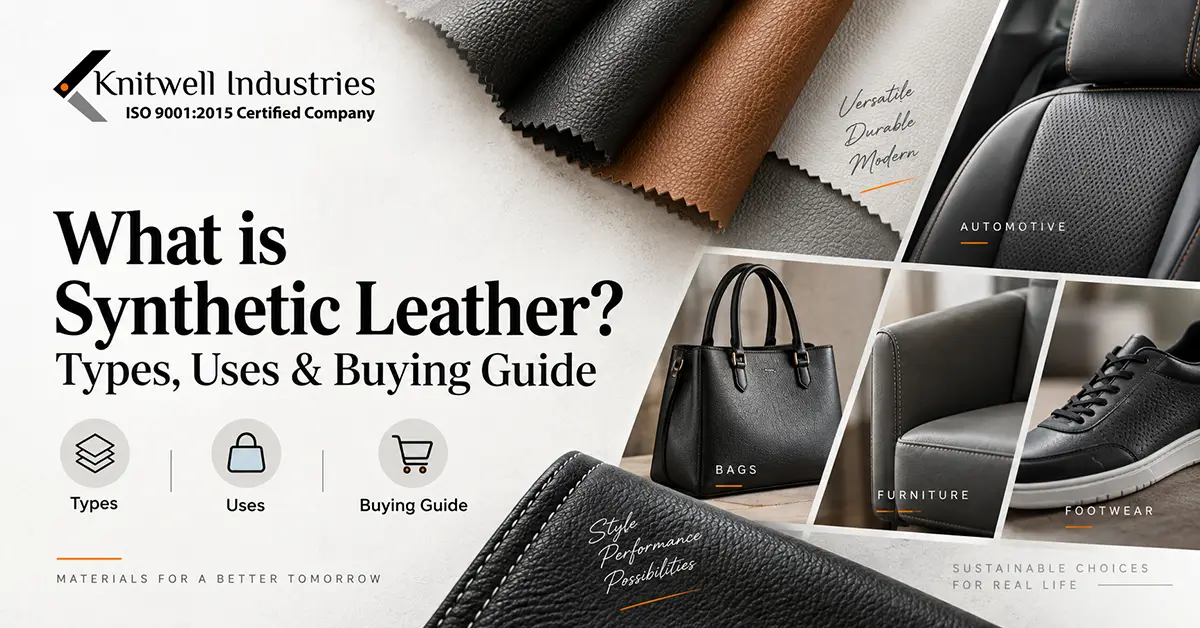
Synthetic leather is used in car interiors, shoes, sofas, bags, jackets, wallets, office furniture and many other everyday items. Provides the look and feel of leather without the use of animal hide. Depending on the grade it can also offer good flexibility, water resistance, easy cleaning and a uniform color.
If you have searched synthetic leather kya hota hai or what is synthetic leather, the basic answer is simple: synthetic leather is a man-made material created to imitate natural leather. Manufacturers usually apply PU or PVC coating over a textile or fabric base and then add colour, grain, texture or embossing according to the intended application.
What Is Synthetic Leather? Types, Uses & Buying Guide for Everyday Applications
Synthetic leather means a manufactured leather-like material designed for products where appearance, flexibility, durability and easy maintenance matter. You may also hear names such as artificial leather, faux leather, leatherette, PU leather and PVC leather.
The material can be smooth, grainy, soft, glossy, matte, printed or embossed. This flexibility explains why manufacturers use it across Automotive, Footwear, Furnishing, Leather Goods & Garments, Embossed & Printed Leather, and New Products & Textures. These are also major product categories used by Knitwell Industries.
Main Types of Synthetic Leather
Not every synthetic leather behaves the same way. The coating, backing material, thickness and finishing process affect how the final product feels and performs.
PU Leather
PU leather uses polyurethane coating over a fabric base. It tends to have a softer and more flexible feel making it popular for footwear, clothing, handbags and certain furniture applications.
People asking what is vegan leather often come across PU leather because many PU products contain no animal hide. However, buyers should check the complete material composition before assuming every product marketed as vegan leather is identical.
PVC Synthetic Leather
PVC leather uses polyvinyl chloride coating and is widely chosen where water resistance, surface strength and easy maintenance matter. Knitwell Industries manufactures PVC-coated fabrics for applications including furnishing upholstery, automotive products, shoes, bags, garments and belts.
PVC leather works well for:
- Car and vehicle upholstery
- Sofas and chairs
- Shoes and slippers
- Bags and wallets
- Belts
- Wall panels
- Commercial furnishings
Microfiber Synthetic Leather
Microfiber synthetic leather uses very fine synthetic fibres to create a dense structure. Premium grades can provide a softer touch, good strength and an appearance closer to natural leather. It is often considered for demanding footwear and automotive applications.
What Is Embossed Leather?
People searching what is embossed leather or embossed leather meaning usually want to understand the surface pattern.
Embossing creates a raised or pressed texture on the material. Manufacturers can use it to reproduce leather grain, geometric designs or decorative patterns. Synthetic material can also be printed to create different colours, textures and visual effects.
Embossed & Printed Leather can work well for automotive upholstery, sofas, chairs, bean bags, footwear, garments, wallets, belts, bags, folders, diaries and other decorative products.
Where Is Synthetic Leather Used?
One reason synthetic leather remains widely used is its versatility.
Automotive
Synthetic leather can cover car seats, door panels, headrests and interior trims. Buyers should consider abrasion resistance, heat exposure, flexibility and cleaning requirements before choosing a grade.
Footwear
Synthetic leather shoes are common in casual shoes, sports shoes, safety shoes, slippers and loafers. Knitwell Industries lists synthetic leather designs for footwear upper and lining applications, including loafers, moccasins, slippers, sports shoes and safety shoes.
Furnishing
Furnishing applications include sofas, couches, chairs, bed panels, bean bags and wall panels. The material should be selected according to expected wear, cleaning frequency and surface feel.
Leather Goods & Garments
Synthetic material can also be shaped and stitched into Leather Goods & Garments such as handbags, clutches, tote bags, wallets, belts and jackets.
New Products & Textures
Different grains, colours, finishes and thicknesses allow manufacturers to develop New Products & Textures for fashion, upholstery and commercial requirements.
Synthetic Leather vs Real Leather
The synthetic leather vs real leather comparison depends on what you want from the finished product.
Natural leather develops from animal hide and has its own grain variation. Synthetic leather gives manufacturers greater control over colour, thickness and surface pattern. It can also be easier to wipe clean and generally costs less than comparable genuine leather grades.
When comparing artificial leather vs genuine leather, consider:
- Required lifespan
- Surface feel
- Product budget
- Water exposure
- Maintenance
- Colour consistency
- Intended application
- Thickness and backing
- Abrasion requirements
Neither material automatically suits every product. The right option depends on where and how it will be used.
Is Faux Vegan Leather the Same as Synthetic Leather?
Faux vegan leather is a broad term for materials designed to resemble leather without using conventional animal hide. Many products use PU or PVC, while newer alternatives may use recycled or partly plant-based components.
That means “vegan leather” describes a category rather than one single material specification. Check the composition, backing and coating before buying.
How to Choose Synthetic Leather
A good buying decision starts with the application rather than appearance alone.
Check these points before ordering:
- End use: footwear, furniture, automotive or bags
- Thickness: match it with stitching and construction needs
- Backing: check strength and flexibility
- Finish: smooth, grainy, printed or embossed
- Abrasion resistance: important for high-contact surfaces
- Water resistance: useful for demanding environments
- Colour consistency: particularly important for bulk orders
- Sample testing: always test the material in the actual product
Price matters, but choosing only by the lowest rate may create problems with cracking, peeling, stretching or inconsistent finishing later.
FAQs
1. What is synthetic leather?
Synthetic leather is a man-made material designed to reproduce the appearance and feel of natural leather.
2. Synthetic leather kya hota hai?
Synthetic leather ek artificial leather material hota hai jo usually fabric base par PU ya PVC coating se banaya jata hai.
3. What is embossed leather?
Embossed leather has a pressed surface pattern that creates grain, texture or decorative detailing.
4. Is synthetic leather good for shoes?
Yes. Proper footwear-grade synthetic leather can work well for uppers, linings, slippers, sports shoes and safety shoes.
5. What is the difference between synthetic and real leather?
Real leather comes from animal hide, while synthetic leather is manufactured using coated fabric or similar man-made materials.