
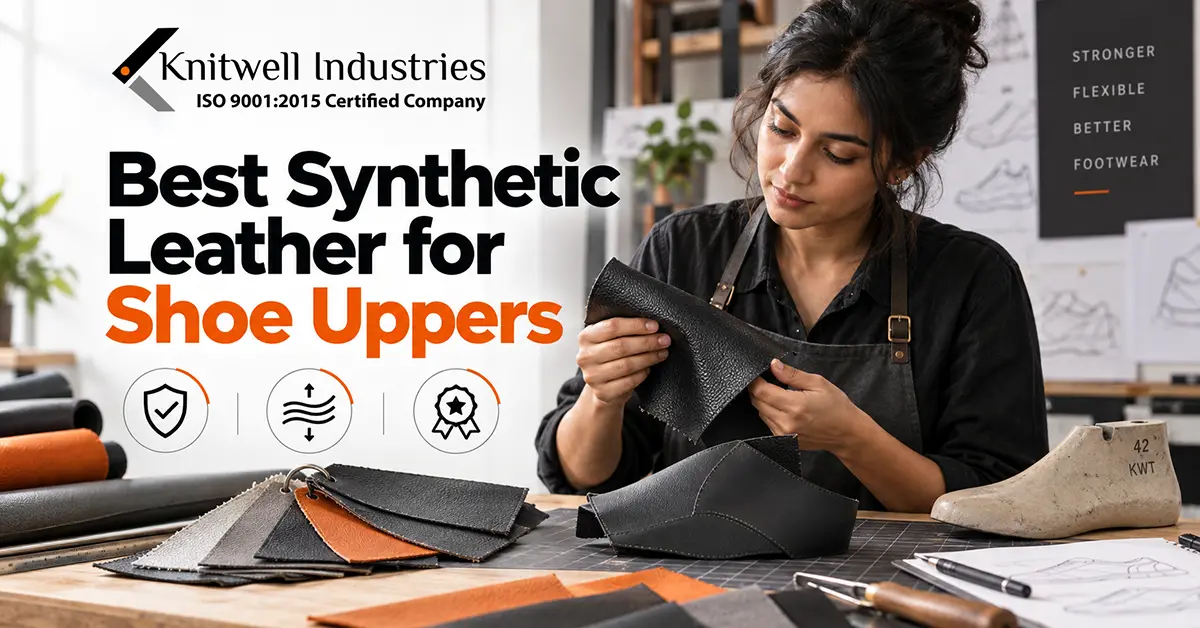
The synthetic leather for shoe uppers should possess esthetic appearance, flexibility, shape retention and durability. The upper is most of the visible part of a shoe, so the material affects appearance, comfort, durability, cleaning and production cost. The shoe upper materials that footwear manufacturers are dealing with now are PU leather, PVC synthetic leather, textile upper fabrics, mesh, microfiber and natural leather. For many footwear categories, synthetic leather gives manufacturers more control over colour, grain, thickness, and surface finish. Knitwell Industries also supplies PVC-coated fabrics for footwear applications and works with upper and lining requirements for different shoe categories.
Best Synthetic Leather for Shoe Uppers: Material Choice, Uses and Quality Factors
Choosing an upper material is not simply about selecting the best-looking sheet. A school shoe, safety shoe, loafer, slipper, and sports shoe all face different conditions. The right upper material of shoes must suit the construction, expected movement, weather exposure, price range, and desired finish.
Most manufacturers prefer to use synthetic leather because they can produce a consistent surface with many different grains and textures. It’s also easier to clean than some natural materials and allows footwear brands to maintain a more consistent look across larger production batches.
What Is Upper Material on Shoes?
The shoe upper is the section that covers the top and sides of the foot and connects to the sole. Depending on the design, it may include the vamp, quarters, toe area, tongue, and other stitched panels.
When someone asks what is upper material on shoes, they are asking what material forms this main outer structure. Common options include:
- Synthetic leather
- Natural leather uppers
- Textile upper fabric
- Mesh
- Canvas
- Knitted fabric
- Microfiber materials
Each shoe material behaves differently. A sports shoe may require lighter and more breathable fabric, while formal footwear often needs a smooth surface with enough structure to maintain its shape.
PU Synthetic Leather for Shoe Uppers
PU leather is commonly considered when flexibility and a softer feel are important. It can bend with the foot and can be produced with smooth, matte, glossy, or leather-grain surfaces.
Many buyers also ask, what does PU upper mean in shoes? It means polyurethane-coated synthetic material has been used for the upper portion of the footwear.
A PU synthetic upper material can work well for:
- Casual shoes
- Fashion footwear
- Sandals
- Loafers
- Lightweight footwear
Before bulk production, manufacturers should still test thickness, backing strength, bending performance, stitching behaviour, and surface finish because specifications vary from product to product.
For readers comparing artificial leather types, this section creates a natural internal link to PU vs PVC Artificial Leather, where the differences in flexibility, construction, surface feel, and typical applications can be explained in more detail.
PVC Synthetic Leather for Footwear
PVC synthetic leather remains another widely used option, especially where manufacturers need a firmer surface, easy cleaning, controlled texture, and economical production.
Knitwell Industries states that its footwear range includes PVC synthetic leather used for upper and lining needs and lists applications such as loafers, moccasins, slippers, sports shoes, and safety shoes. The company also lists multiple designs and textures for its footwear segment.
A good synthetic upper should provide enough strength without becoming unnecessarily stiff. Manufacturers should match the thickness and backing to the footwear construction rather than choosing one material for every design.
This is also a suitable place to internally link Footwear Artificial Leather, especially for visitors who want to explore material options developed specifically for footwear.
Textile Upper vs Synthetic Upper
A textile upper is commonly used where low weight, softness, ventilation, or sporty styling matters. Knitted fabrics, mesh, canvas, and woven textiles can provide more airflow than coated synthetic materials.
Synthetic leather, however, may work better when a shoe requires:
- A cleaner leather-like appearance
- Easier surface wiping
- Embossed grains
- Consistent colours
- Better structural appearance
- Decorative printed finishes
Some footwear combines both materials. For example, synthetic leather panels may support the toe and heel while textile sections improve flexibility or ventilation.
Surface Texture Matters in Shoe Design
The surface is one of the first details buyers notice. Synthetic leather can carry leather grains, smooth finishes, metallic effects, decorative prints, and pressed patterns.
Embossed and Printed Leather gives footwear designers more freedom to be creative when designing distinctive collections. Embossing creates a raised or pressed texture, while printing can add patterns and visual details. Knitwell Industries lists embossed and printed artificial leather among its product categories and notes its use across footwear, accessories, furniture, and other applications.
For new seasonal collections, New Products and Textures can also be used as an internal link where customers can explore alternative finishes and surface developments.
How to Choose Shoe Upper Materials
Before selecting any shoes upper material, check how the finished footwear will actually be used.
- Check flexibility
The upper should bend naturally around common flex points without developing early cracks.
- Review thickness
Heavy-duty footwear may need more body, while fashion and lightweight footwear may require thinner material.
- Inspect the backing
Backing influences stitching, bonding, shape retention, and overall construction.
- Test the surface
Check colour consistency, grain, abrasion behaviour, and resistance to routine handling.
- Make samples first
A material that looks good on a roll may behave differently after cutting, stitching, lasting, and bonding.
Footwear manufacturers can also compare Major Footwear Materials Used in India and How to Choose Right Material for Premium Footwear when planning different product categories. Knitwell Industries currently publishes both topics within its footwear-related blog content.
FAQs
Which synthetic leather is best for shoe uppers?
PU works well where softness and flexibility matter, while PVC can suit footwear requiring a firmer, easy-to-clean surface.
Is synthetic leather good for shoes?
Yes. It is widely used in casual shoes, slippers, loafers, safety shoes, fashion footwear, and other categories.
What does synthetic upper mean?
It means the visible upper part of the shoe is made from man-made material rather than natural leather.
Is textile upper better than synthetic leather?
Neither is better for every shoe. Textile suits lighter and breathable designs, while synthetic leather suits structured leather-like finishes.
What should manufacturers check before buying shoe upper material?
Check flexibility, thickness, backing, surface finish, stitching performance, bonding, and samples before bulk ordering.