
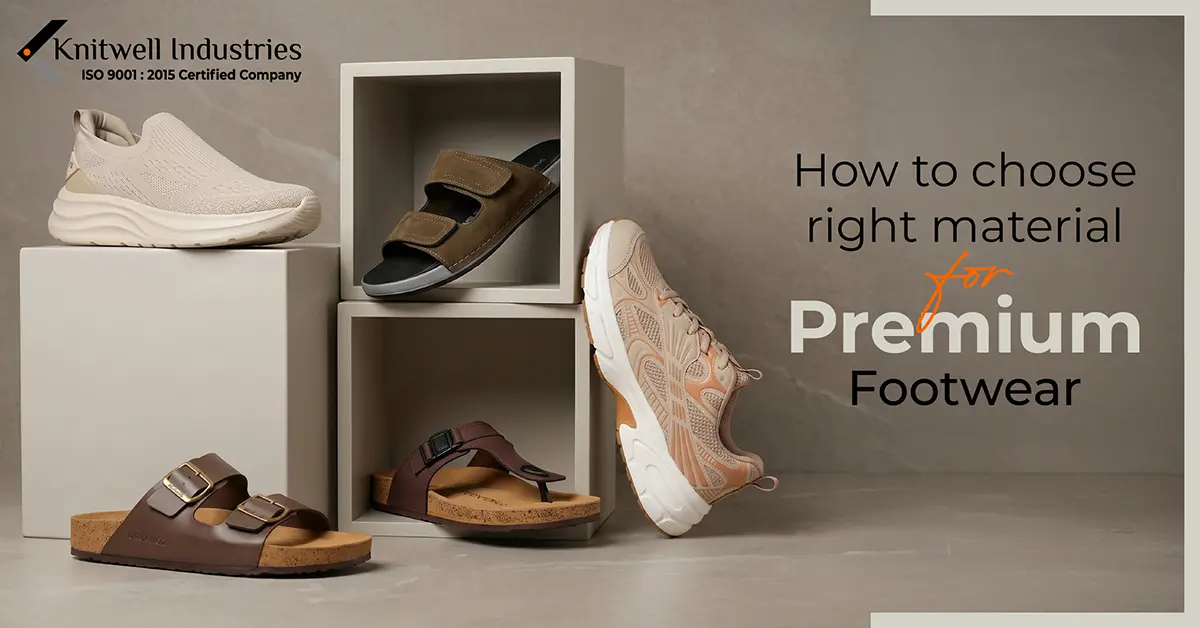
Choosing the right material for premium footwear starts with understanding how the shoe will be used. A formal shoe needs shape, polish, and comfort. A sports shoe needs airflow, flexibility, and grip. A work boot needs strength and protection. The material affects every part of the shoe, from its look and weight to its comfort and lifespan.
There is no single best material for shoes. The right choice depends on the design, weather, daily use, care needs, and price range. A good material should feel comfortable, hold its form, and perform well after repeated wear.
Why Material Choice Matters in Footwear
The material decides how a shoe bends, breathes, fits, and lasts. Poor material selection can cause cracks, fading, sweating, weak stitching, or sole separation.
Premium footwear should not only look attractive. It should also feel comfortable after several hours of use. The upper, lining, insole, midsole, and outsole all need materials that suit their job.
For example, leather may work well on the upper of a formal shoe, while rubber may offer better grip on the sole. A running shoe may use mesh for airflow and EVA foam for cushioning.
What Materials Are Shoes Made Of?
Many people ask, what materials are shoes made of? Most shoes contain several materials rather than one single option. Each section of the shoe needs a different level of strength, softness, or flexibility.
A common shoe making materials list includes:
- Full-grain leather
- Top-grain leather
- Suede
- Nubuck
- Canvas
- Cotton
- Mesh
- Knitted fabric
- Synthetic leather
- Rubber
- EVA foam
So, what are shoes made of in practical terms? A sports shoe may have a mesh upper, textile lining, foam midsole, and rubber outsole. A dress shoe may use leather outside, soft lining inside, and leather or rubber underneath.
Compare Common Materials for Shoes
| Material | Main Quality | Suitable For |
|---|---|---|
| Full-grain leather | Strong and breathable | Formal shoes and boots |
| Suede | Soft and flexible | Loafers and casual footwear |
| Mesh | Light and airy | Running and gym shoes |
| Knitted fabric | Stretchable and comfortable | Sneakers and slip-ons |
| Canvas | Easy to colour and shape | Casual and summer shoes |
| Synthetic leather | Easy to clean | Fashion and school shoes |
| Rubber | Good grip and water resistance | Soles and work footwear |
| EVA foam | Soft and lightweight | Sports shoes and sandals |
This comparison also works well as an infographic for readers who want a quick overview.
Best Material for Formal Shoes
Leather remains a common choice for formal footwear because it holds its shape and develops a polished finish. Full-grain leather offers strength, while calfskin gives dress shoes a smoother surface.
Suede and nubuck suit loafers, driving shoes, and relaxed formal styles. They feel softer but need more care than smooth leather.
The lining also matters. Soft leather or breathable fabric can reduce rubbing and keep the foot comfortable during long office hours.
A useful internal link from this section could lead to a guide on leather types, shoe lining, or formal shoe construction.
Best Footwear Material for Sports Shoes
Sports shoes need materials that allow quick movement without adding unnecessary weight. Mesh and knitted fabric work well for uppers because they allow airflow and bend with the foot.
Knitted uppers also reduce heavy seams. Knitwell Industries provides knitted fabric options that can suit sneakers, walking shoes, sports shoes, and slip-ons where stretch and breathability matter.
EVA foam often appears in the midsole because it provides cushioning. Rubber works well on the outsole because it improves grip and handles surface contact.
For example, a walking shoe may use a knitted upper, soft foam under the foot, and rubber in high-wear areas.
Best Material for Casual Shoes
Canvas, denim, mesh, knit, and synthetic leather are common materials for shoes made for daily wear. They allow more choice in colours, prints, textures, and finishes.
Canvas suits summer sneakers. Knit works well for light slip-ons. Synthetic leather provides a neat finish and usually needs less care than natural leather.
Before choosing a casual footwear material, check:
- Colourfastness
- Tear strength
- Flexibility
- Cleaning needs
- Shape retention
- Resistance to sweat and sunlight
A shoe may look good when new, but poor-quality fabric can fade or lose shape after a few weeks.
Material Choice for Work and Outdoor Footwear
Work shoes and outdoor boots need more protection than casual footwear. Thick leather, coated fabric, rubber, waterproof layers, and reinforced materials can handle rough conditions.
Depending on the job, footwear may also need:
- Anti-slip soles
- Oil-resistant rubber
- Reinforced toe areas
- Puncture-resistant layers
- Strong stitching
- Moisture-control lining
A warehouse shoe does not need the same protection as a construction boot. The material should match the actual working environment.
Check Comfort, Weight, and Breathability
Comfort should remain part of every material decision. A premium shoe should not feel too hard, hot, or heavy.
Leather, cotton, mesh, and knitted fabric usually allow more airflow than closed synthetic surfaces. These materials work well in warm or humid weather.
Weight also matters. Heavy shoes can feel tiring after long use. Lightweight materials such as EVA, mesh, and knit help reduce pressure on the feet.
The lining deserves equal attention. Soft textile, leather, or moisture-control fabric can reduce friction and improve the feel inside the shoe.
Match the Material to the Weather
Climate changes how footwear performs. Mesh and knit suit warm weather. Coated leather and rubber work better during rain. Waterproof layers help protect outdoor shoes.
In humid regions, quick-drying fabric can reduce moisture build-up. In colder areas, insulation and water protection become more important than airflow.
Manufacturers should think about where the footwear will be sold before choosing the material.
Test Materials Before Production
Never select a material only by looking at a catalogue image or small swatch. Test it in real production conditions.
Important checks include:
- Flex resistance
- Tear strength
- Abrasion resistance
- Colourfastness
- Water resistance
- Shrinkage
- Bonding strength
- Shape retention
A sample shoe can reveal issues before bulk production begins. It also shows whether the upper, lining, adhesive, foam, and sole work well together.
A short video showing bend testing, sole bonding, or abrasion testing can make this section more useful for readers.
Choose Material According to the Shoe’s Purpose
Learning how to choose the right material for premium footwear becomes easier when the shoe’s purpose stays clear. Formal shoes need shape and finish. Sports shoes need movement and cushioning. Outdoor shoes need grip and protection.
The best material for shoes is the one that suits the design, weather, comfort needs, and expected use. Leather, mesh, knitted fabric, EVA, rubber, and synthetic materials all have a place in footwear production.
Manufacturers should test every material, work with reliable suppliers, and avoid choosing only on price. Good material selection leads to better comfort, fewer quality problems, and shoes that customers can wear for longer.
FAQs
What is the best material for shoes?
It depends on the shoe type. Leather suits formal footwear, while mesh and knit work well for sports shoes.
What materials are shoes made of?
Shoes may contain leather, fabric, mesh, foam, rubber, adhesives, lining, and support materials.
Is leather better than synthetic material?
Leather offers breathability and long wear. Synthetic material is easier to clean and often costs less.
Is knitted fabric suitable for premium footwear?
Yes. Knitted fabric feels light, bends easily, and allows better airflow.
Why should footwear material be tested?
Testing helps check strength, comfort, colour, flexibility, bonding, and performance before bulk production.